Irish Residence Permit (IRP) in 2026: The Complete Application and Renewal Guide
Every non-EEA national planning to live in Ireland for more than 90 days needs an Irish Residence Permit. The card is your proof of legal status, your right to work, your ability to re-enter the country after a trip abroad, and the backing document the NDLS wants to see before issuing a driver's licence to anyone born outside the EU. The system moved fully online in late 2024, and first-time registrations centralised through Immigration Service Delivery in January 2025. Both changes were supposed to speed things up. In practice, renewal delays are running at up to 12 weeks, and anyone whose documents are not in order is finding out the hard way. Here is where the IRP process actually stands in 2026.
What the IRP Is and Who Needs One
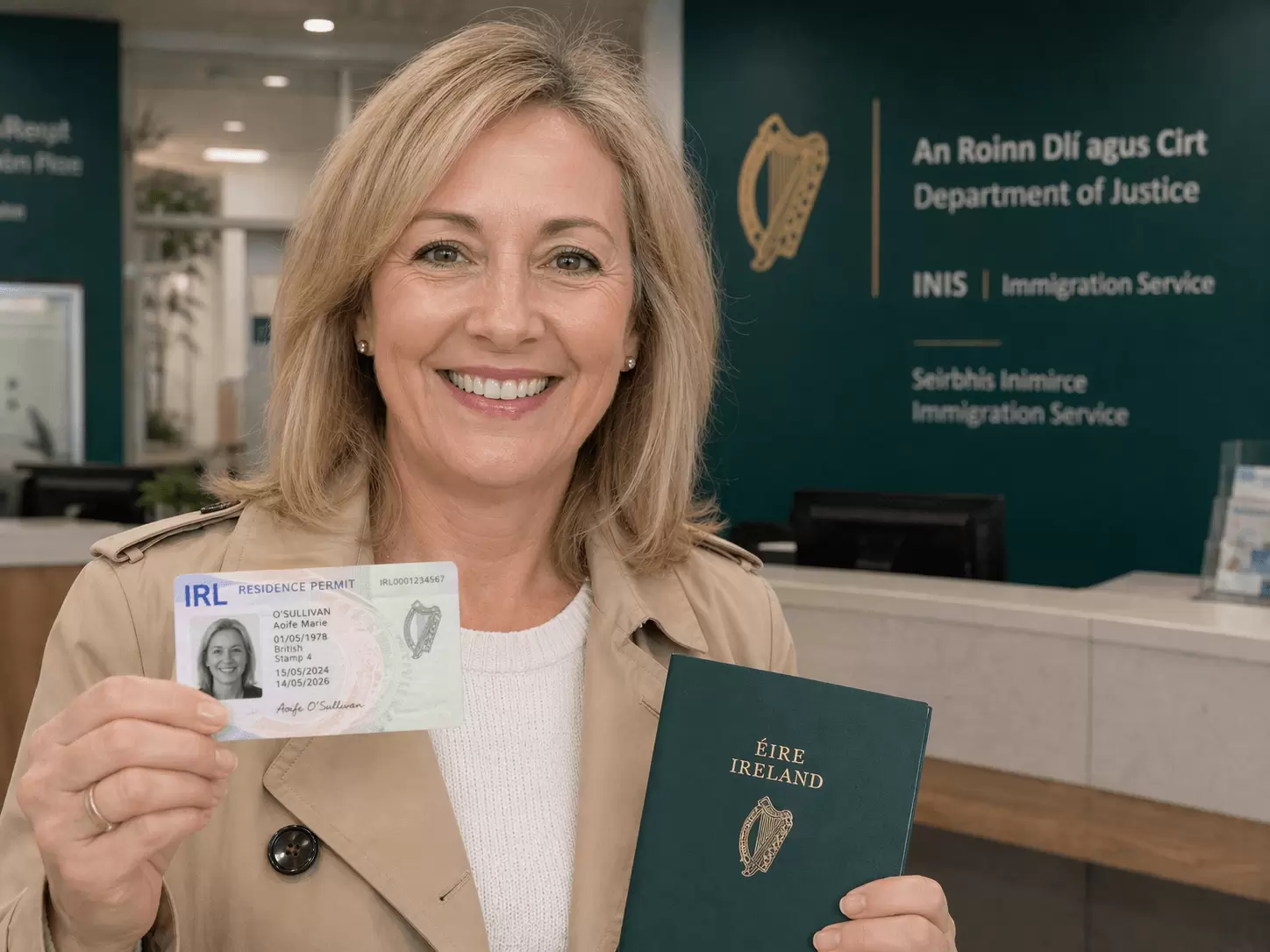
The Irish Residence Permit is a credit-card-sized plastic document issued by Immigration Service Delivery. It shows your name, photo, date of birth, immigration stamp type, registration number, and the expiry date of your current permission. It replaced the old GNIB card in 2017, though many people still use the terms interchangeably.
You need an IRP if you are a non-EEA, non-UK, non-Swiss citizen staying in Ireland for more than 90 days. That covers work permit holders, students on Stamp 2, graduates on Stamp 1G, family members of Irish or EU citizens, Stamp 4 holders, refugees and subsidiary protection beneficiaries, and Ukrainians under Temporary Protection. EU, EEA, UK, and Swiss citizens are exempt from IRP registration, though they may still need to register for other purposes like a PPS number.
The IRP is not a visa. It does not grant you travel rights to other countries. It is specifically your Irish registration card, paired with your passport, proving your immigration stamp allows you to live, work, or study in Ireland under the conditions of that stamp.
Anyone who needs to apply for an Irish Residence Permit (IRP) should understand that the application you make depends on whether this is your first registration in Ireland or a renewal of an existing permission.
Immigration Stamps and What They Mean
Your IRP card shows a stamp number. Each stamp corresponds to a different type of permission with its own conditions.
Stamp 1 is for employment permit holders, with the right to work for the named employer. Stamp 1G is for graduates allowed to remain and seek employment after study. Stamp 2 is for full-time students, with a limit of 20 hours of work per week during term. Stamp 3 is for dependants, ministers of religion, and certain other categories, with no right to work. Stamp 4 is the most flexible stamp, granting the right to work without needing an employment permit, and is held by long-term residents, spouses of Irish citizens, refugees, and holders of Critical Skills Employment Permits after two years. Stamp 5 is given after 8 years of lawful residence and removes the need for further renewals.
Moving from one stamp to another, for example Stamp 2 student to Stamp 1G graduate, or Stamp 1 employment permit to Stamp 4 after five years, is done through the renewal portal when the time comes.
First-Time IRP Registration
As of 13 January 2025, Immigration Service Delivery took over all first-time registrations nationwide. The old system of registering at Garda National Immigration Bureau offices for people outside Dublin is gone. Everyone now registers through ISD using the centralised online process.
The steps: arrive in Ireland with your visa (if required) and enter on the stamp type your entry clearance permits. Set up an ISD online account. Upload your supporting documents (passport biometric page, entry visa where applicable, evidence of the basis for your permission like an employment permit or admission letter, proof of address in Ireland, proof of financial means where required). Pay the €300 registration fee by card. Attend the appointment ISD schedules for fingerprinting and photograph capture. Wait for the IRP to arrive by post, typically within 15 working days of successful processing.
Who Is Exempt from the €300 Fee
Several categories do not pay. Minors under 18. Spouses, widows, and widowers of Irish citizens. Civil partners and surviving civil partners of Irish citizens. EU Treaty Rights family members with an EU residence card. Refugees, subsidiary protection holders, and those with leave to remain under international protection laws. Beneficiaries of refugee family reunification. If you fit any of these categories, check before paying because the system does not always apply exemptions automatically.
Renewing Your IRP Card
Your IRP comes with an expiry date printed on the front. To continue living in Ireland legally you must renew before that date. The online renewals portal opens up to 12 weeks before your expiry, and you are advised to apply as early as possible because processing delays in 2026 are significant.
The renewal process: log into your ISD online account or create one, check which documents you need for your specific stamp category, upload digital copies (scans or photos clear enough for an officer to read), pay the €300 fee where applicable, and submit. Processing can take up to 10 weeks, plus another 1 to 2 weeks for the physical card to arrive by post. That puts the effective wait at around 12 weeks in peak periods.
Stamp 2 students must wait until their new course starts before they can renew, which is a common source of timing confusion for students moving between academic years.
The Christmas Travel Concession and Travel While Renewing
The Department of Justice extended a temporary measure allowing non-EEA nationals to travel on a recently expired IRP card between 8 December 2025 and 28 February 2026, provided they submitted a renewal before the expiry date and carry a printed Travel Confirmation Notice along with the expired card. This was a response to the current processing delays, and similar concessions may appear in future years if backlogs continue.
Outside of this concession, travel on an expired IRP is not permitted. Non-visa required nationals can return using their passport and evidence of their submitted renewal, but visa-required nationals typically need to apply for a "D" re-entry visa from an Irish Embassy abroad if they leave Ireland while renewal is pending. The advice from ISD is clear: do not plan non-essential travel while a renewal is in progress.
Ukrainian Temporary Protection
Ireland has extended immigration permissions for beneficiaries of Temporary Protection until 4 March 2027. Ukrainians holding a Temporary Protection Certificate valid until 4 March 2026 do not need a new certificate, but they do need to renew their IRP card through the standard ISD portal. The fee does not apply to Temporary Protection beneficiaries.
Lost, Stolen, or Damaged IRP Cards
If your IRP is lost or stolen, report it to An Garda Síochána immediately. Get a Garda report reference. Then contact Immigration Service Delivery through the dedicated replacement channel. A replacement IRP requires proof of the original registration, a copy of the Garda report, and a fee. The replacement card does not extend your permission; it just gives you a new physical card showing the existing expiry date.
Common IRP Application and Renewal Problems
Incomplete document uploads are the top cause of rejection. ISD asks for specific combinations depending on your stamp category, and uploading an old utility bill, an expired passport page, or missing the letter from your employer can block processing for weeks while they ask for the right documents.
Stamp changes create confusion. Moving from Stamp 2 to Stamp 1G requires evidence of graduation on the timeline the Stamp 1G rules allow. Moving from Stamp 1 to Stamp 4 after five years requires a Stamp 4 support letter from the employment permits system. People often apply under the wrong stamp and have to start again.
Address mismatches between your passport, utility bills, and ISD account slow things down. Fee exemptions not being applied where they should is another recurring issue, especially for spouses of Irish citizens and for Temporary Protection holders.
Where Application Support Makes a Difference
For straightforward renewals on a consistent stamp with up-to-date documents, the ISD online portal works. For first-time registrations, stamp transitions, complex family cases, fee exemption applications, or any renewal where the paperwork is not perfectly lined up, the current processing backlog means errors cost months rather than days.
NDL Service works with non-EEA nationals going through the IRP process who want the application prepared and submitted correctly the first time. That means confirming the right stamp type for your situation, gathering the specific documents ISD expects for that stamp, handling fee exemption claims where they apply, and managing replacement applications when cards are lost abroad. For workers whose right to stay in employment depends on a clean renewal, students whose visa renewal is tied to course start dates, or family members whose stamp affects their ability to remain, professional support turns a stressful process into a managed one.
Getting Your IRP Sorted
The IRP is not optional if you are non-EEA and staying in Ireland more than 90 days. Getting it right, whether for first-time registration, renewal, stamp change, or replacement, protects your right to live, work, study, and travel. The online system is functional but unforgiving of paperwork errors, and current processing times leave little room for correction loops.
For anyone wanting help with the full IRP application or renewal process, the Irish Residence Permit application service at NDL Service handles the documentation preparation, fee checks, and submission so your permission to live in Ireland stays current without last-minute crises. The card itself is your legal status in physical form, and keeping it valid is the one piece of paperwork you cannot afford to get wrong.